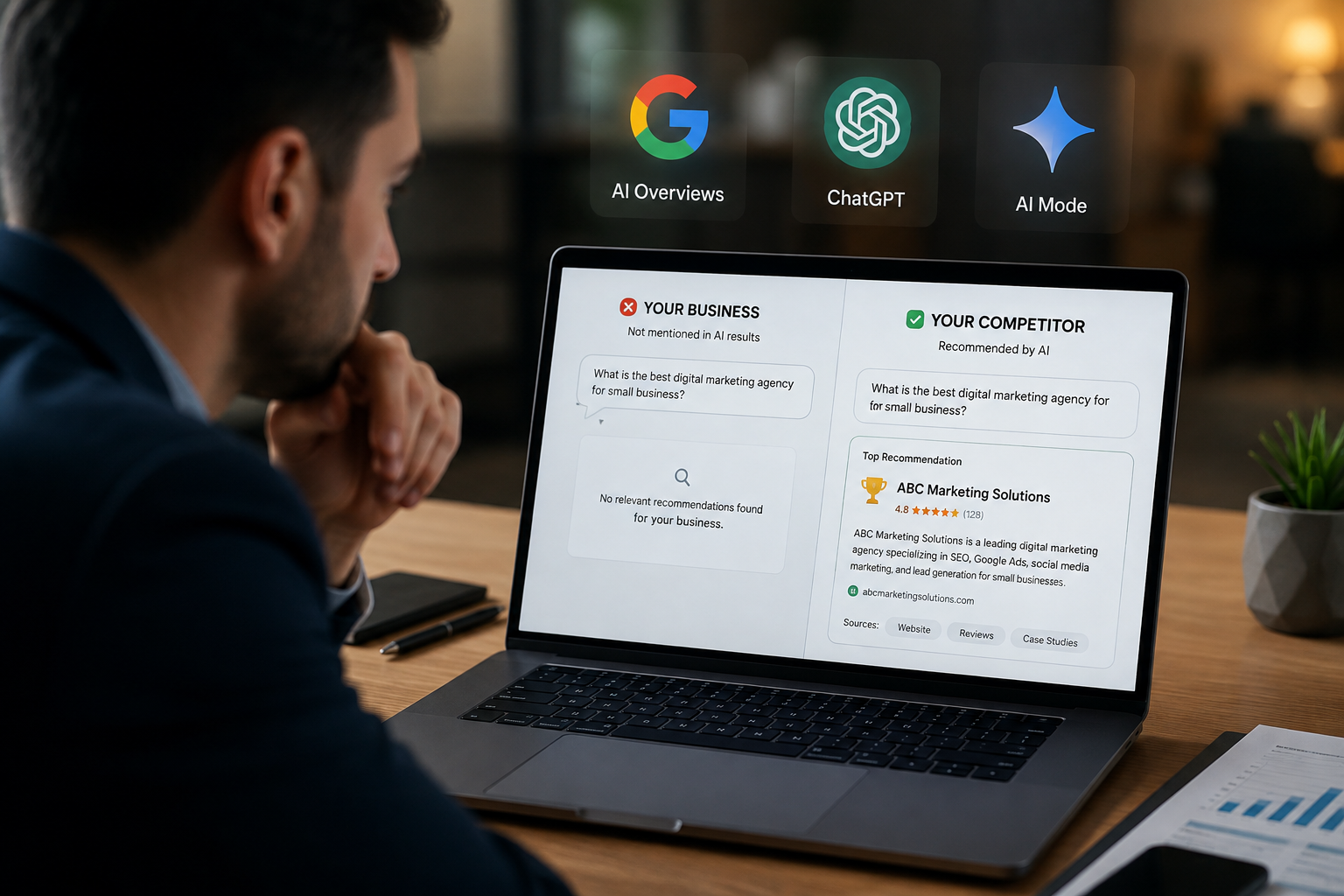
There is a frustrating new reality for business owners: you can have a good website, publish regularly, rank for important keywords, and still discover that AI does not mention your business when potential customers ask for recommendations. Your competitor may not even rank above you in traditional Google results, yet ChatGPT, Gemini, or Google’s AI search experience may mention them first. If that sounds confusing, you are not alone. Search is changing from a simple list of links into a system that increasingly helps people understand options, compare businesses, and decide what to consider next.
The important thing to understand is that AI search has not simply replaced Google rankings with another ranking system. Google says that its AI Overviews and AI Mode continue to rely on foundational SEO practices, and there are no special technical requirements or secret optimizations that guarantee inclusion. A page still needs to be accessible, indexable, eligible for Search, and genuinely useful to people.
So why can one business get recommended while another remains invisible?
The answer usually has less to do with a single keyword and more to do with how clearly the business can be understood, trusted, connected to relevant topics, and supported by information across the web.
AI Search Is Changing How Customers Discover Businesses
For years, the customer journey was relatively straightforward. Someone searched Google, looked at several blue links, visited a few websites, compared prices or services, and eventually contacted a business. Today, that journey can start with a much more conversational question.
A business owner might ask, “What is the best digital marketing agency for a small ecommerce company?” A startup founder might ask, “Which SEO agencies in India specialize in SaaS?” A local business owner might ask, “Who can help me generate leads with Google Ads without wasting my budget?”
Instead of receiving only ten links, the customer may receive an explanation, several recommendations, comparisons, supporting sources, and follow-up suggestions. That changes the competitive environment. Your business is no longer competing only for a position on a search results page. You are also competing to become one of the businesses that an AI system considers relevant enough to mention.
Google describes AI Overviews and AI Mode as experiences that help people understand complex questions and explore relevant links. The exact responses and links can vary because these experiences can use different models and techniques.
That variability creates both a challenge and an opportunity.
Ranking on Google Does Not Automatically Mean AI Will Recommend You
One of the biggest misconceptions about AI search is that ranking number one for a keyword automatically means your business will be recommended by AI.
It does not.
Traditional SEO can help a search engine understand that your page is relevant to a query. But a recommendation-style question can involve many additional considerations. The system may need to understand what your business does, who it serves, where it operates, what makes it different, whether other trustworthy sources support those claims, and whether your content actually answers the customer's underlying question.
Imagine that your company ranks well for “digital marketing agency.” That tells Google something about your relevance to the topic. But if a customer asks, “What is a good digital marketing company for a small business that needs SEO and Google Ads?” the system has to understand much more than your ranking position.
It needs context.
If your website says that you provide digital marketing services but never clearly explains who those services are for, what problems you solve, what industries you understand, what results you have achieved, and why customers should trust you, another business with stronger contextual signals may be easier for AI to recommend.
This is one reason modern SEO is becoming less about writing a page for one keyword and more about building a clear, trustworthy representation of the business.
Your Competitor May Be Easier for AI to Understand
Sometimes the problem is not that your competitor is better.
It is that your competitor is clearer.
Suppose two agencies offer SEO services. Agency A has a homepage filled with vague phrases such as “innovative solutions,” “digital transformation,” and “next-generation marketing.” Agency B clearly explains that it helps B2B SaaS companies increase qualified organic leads through technical SEO, content strategy, and conversion optimization.
A human can probably understand both businesses. An AI system has to interpret the information and connect it with a user's question.
Agency B gives it much stronger context.
This is why your website should answer basic questions naturally and clearly. What exactly do you do? Who do you help? Which industries do you understand? What problems do you solve? What services do you provide? What locations do you serve? What makes your approach different? What evidence supports your claims?
When these answers are scattered, vague, or missing, you create unnecessary uncertainty.
When they are clear, consistent, and supported by useful content, you give search systems much more information to work with.
AI Needs More Than Marketing Claims
There is another reason some businesses struggle to appear in AI recommendations: their websites make plenty of claims but provide very little evidence.
Almost every marketing website says it is experienced, trusted, results-driven, innovative, customer-focused, or committed to excellence.
Those statements are easy to write.
Evidence is much harder.
A stronger website explains what happened, how it was done, what was measured, and what was learned. Instead of saying that your agency delivers outstanding SEO results, explain the type of business you helped, the problem you started with, the strategy you implemented, the timeframe involved, and the measurable outcome.
Instead of saying that your marketing team understands small businesses, publish useful research about the marketing problems small businesses actually face.
Instead of saying that you are an expert in AI search, demonstrate your thinking through original experiments, transparent analysis, examples, and updated research.
Google's current guidance emphasizes helpful, reliable, people-first content and specifically encourages original information, research, reporting, and analysis rather than content created primarily to attract search traffic.
That distinction matters.
Your Website Might Be Talking About You Instead of Helping Your Customer
This is one of the most common problems I see across business websites.
The homepage talks about the company.
The service pages talk about the company.
The blog talks about the company.
The case studies talk about the company.
But the customer is still asking, “Can these people actually solve my problem?”
AI search makes this even more important because many searches are now conversational and problem-focused.
A customer does not necessarily ask, “What companies provide SEO services?”
They might ask, “My website gets traffic but almost no leads. What should I fix first?”
If your website has ten generic articles about SEO but nothing that deeply explains why traffic may fail to convert, you are missing an opportunity.
The most valuable content often starts with the customer's problem rather than the service you sell.
That means creating content around questions such as why Google Ads generate clicks but no customers, why a website ranks but does not convert, why SEO traffic has stopped producing leads, how much marketing a small business should realistically spend, how to choose an agency, and how to determine whether an agency is actually doing good work.
These are not just SEO topics.
They are business questions.
And business questions are exactly where recommendation-style search becomes increasingly important.
Your Competitor May Have Better Topic Authority
AI search does not understand a business from one page alone.
Your overall website creates context.
If your company wants to be recognized for digital marketing, for example, publishing one article about SEO does not establish much depth. But a well-connected content ecosystem covering SEO strategy, technical SEO, content marketing, Google Ads, conversion optimization, AI search, marketing measurement, agency selection, marketing costs, and real-world case studies creates a much stronger topical picture.
The goal is not to publish hundreds of articles.
In fact, Google explicitly warns against producing large amounts of content primarily to manipulate rankings or generative AI responses. Its current guidance recommends focusing on useful, unique content rather than creating separate pages for every possible query variation.
The better strategy is to create fewer, stronger pieces that genuinely answer important customer questions and connect naturally to one another.
A strong article should lead the reader to another useful article.
A service page should explain the problem it solves and link to deeper educational resources.
A case study should connect the strategy to the service.
A research report should support multiple related articles.
That is how a website starts becoming a useful knowledge source instead of simply a collection of blog posts.
Your Brand May Not Have Enough Independent Signals
Your own website is only one part of your digital identity.
Think about what happens when someone asks an AI system about your company. The system may encounter your website, business directories, industry publications, reviews, social profiles, interviews, customer discussions, articles, partner websites, and other references.
The important point is not to chase artificial mentions.
In fact, Google's latest generative AI guidance specifically warns against tactics such as pursuing inauthentic mentions as a supposed AEO or GEO shortcut.
The real opportunity is to become genuinely worth mentioning.
If your company publishes original research, journalists can reference it.
If you create useful industry reports, other websites can cite them.
If you conduct interesting experiments, marketers can discuss them.
If you have genuine customer success stories, those stories can strengthen your credibility.
If your experts contribute useful opinions to industry conversations, your brand becomes associated with those topics.
The goal is not to manufacture authority.
The goal is to earn it.
Reviews Can Tell a Story About Your Business
For many businesses, reviews are treated as something that belongs on Google Business Profile or a testimonials page.
They are much more valuable when viewed as part of your broader reputation.
Customers often describe businesses differently from how businesses describe themselves. A company might say it provides “full-service digital marketing,” while customers repeatedly mention that the team is excellent at fixing technical SEO problems, explaining complex marketing decisions, or generating qualified leads.
Those real descriptions can reveal what your brand is actually known for.
That is why businesses should pay attention to recurring language in genuine customer feedback. What problems do customers say you solved? What outcomes do they mention? What qualities do they repeatedly associate with your team?
Those insights can improve your website, content strategy, service positioning, and messaging.
Your Content May Be Too Generic
This is probably one of the biggest reasons businesses struggle to stand out in modern search.
Search the web for “digital marketing trends,” “SEO tips,” “AI marketing,” or “how to improve SEO,” and you will find thousands of articles saying almost the same things.
AI systems have access to an enormous amount of this material.
So why would your article be the source worth surfacing?
The answer cannot simply be that you used the keyword more often.
You need to give the reader something they cannot get from another generic article.
That could be original research.
It could be a real case study.
It could be a transparent experiment.
It could be a framework you developed.
It could be a detailed comparison based on actual observations.
It could be data from your own marketplace or customers.
It could be a genuinely useful explanation of something that most websites make unnecessarily complicated.
Google's current guidance for generative AI search repeatedly emphasizes unique, valuable, non-commodity content.
That is a much more useful target than trying to “optimize for AI” with a collection of gimmicks.
You Do Not Need an “AI SEO Hack”
There is a growing industry selling shortcuts for GEO and AI search visibility.
Some promise that adding certain phrases, special files, excessive question-answer formatting, or other tricks will make AI systems cite your website.
Be careful.
Google's current guidance says there are no additional technical requirements specifically for AI Overviews or AI Mode beyond the normal requirements for appearing in Search. Google also says that foundational SEO practices remain relevant.
That does not mean AI search requires no strategic thinking.
It means the strategy should start with fundamentals.
Make your website crawlable.
Make important pages indexable.
Explain your business clearly.
Create useful original content.
Build genuine authority.
Make your content easy for people to understand.
Support important claims with evidence.
Keep information accurate and current.
Then build a content ecosystem around the questions your customers actually ask.
One of the Biggest Changes in 2026 Is Measurement
There is now a particularly important reason for businesses to pay attention to AI search visibility.
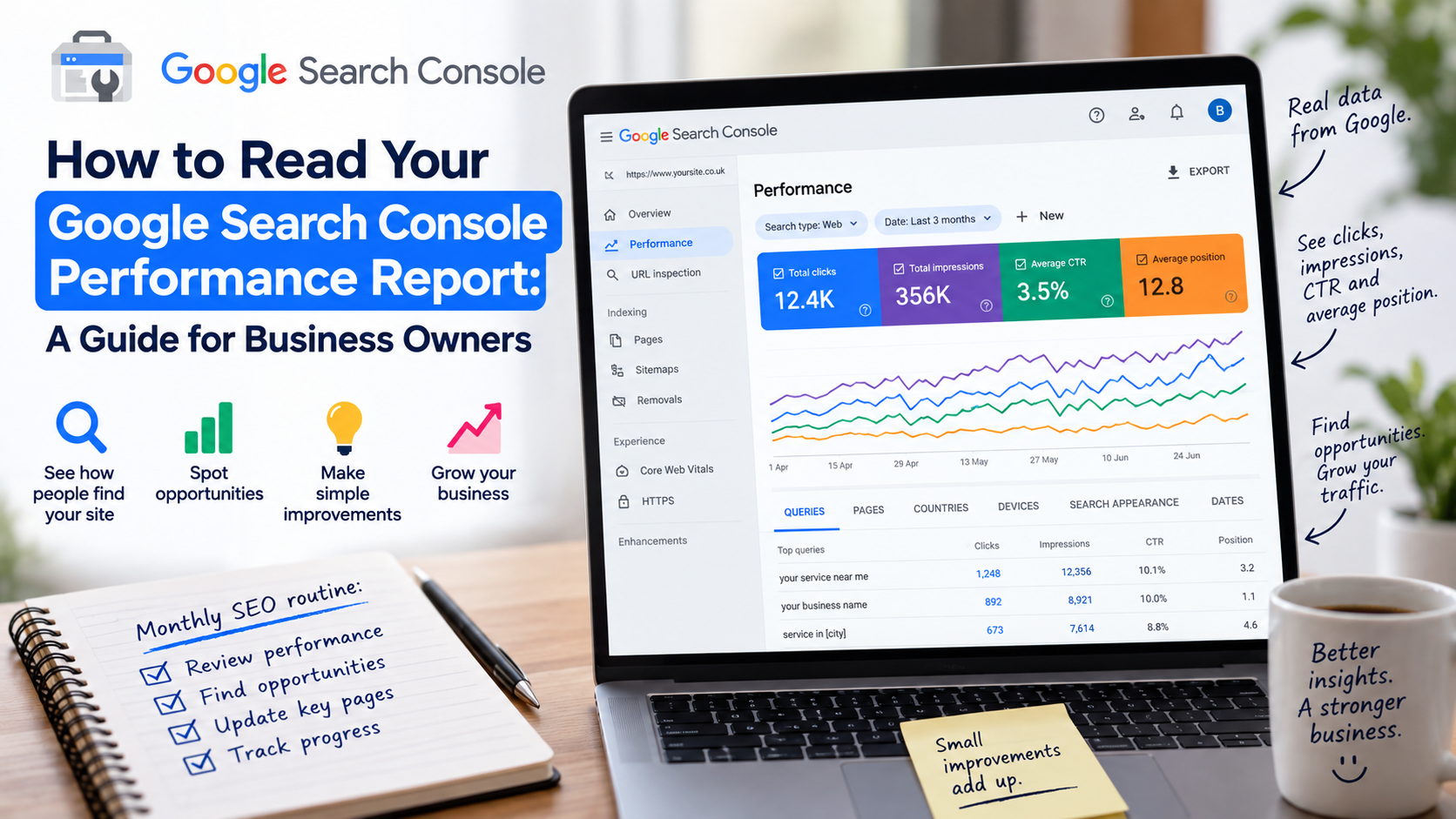
In June 2026, Google announced new Search Console reports for generative AI performance, providing dedicated views of visibility from generative AI features such as AI Overviews and AI Mode. Google said the reports were initially being rolled out to a subset of websites while it tested and gathered feedback.
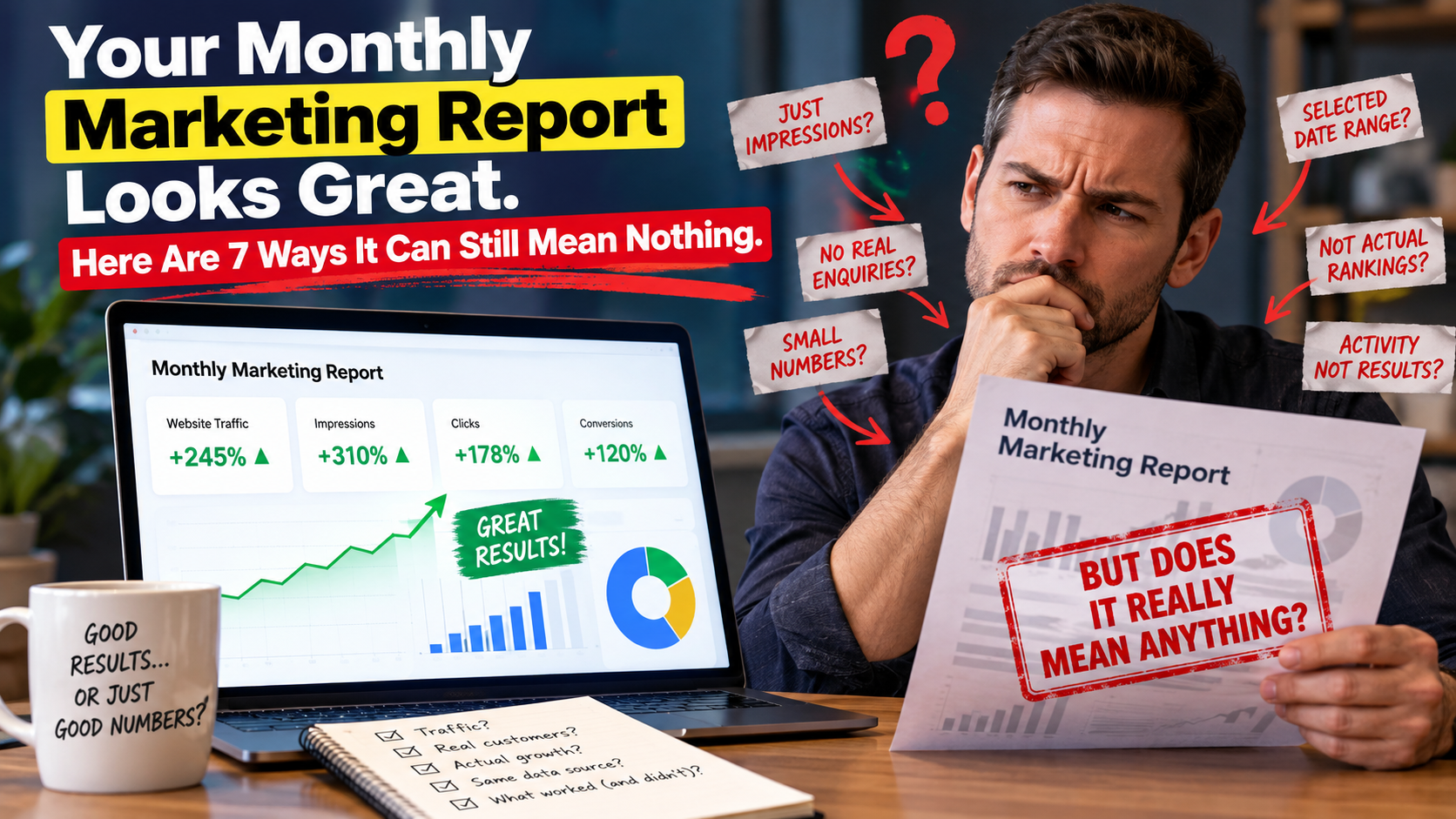
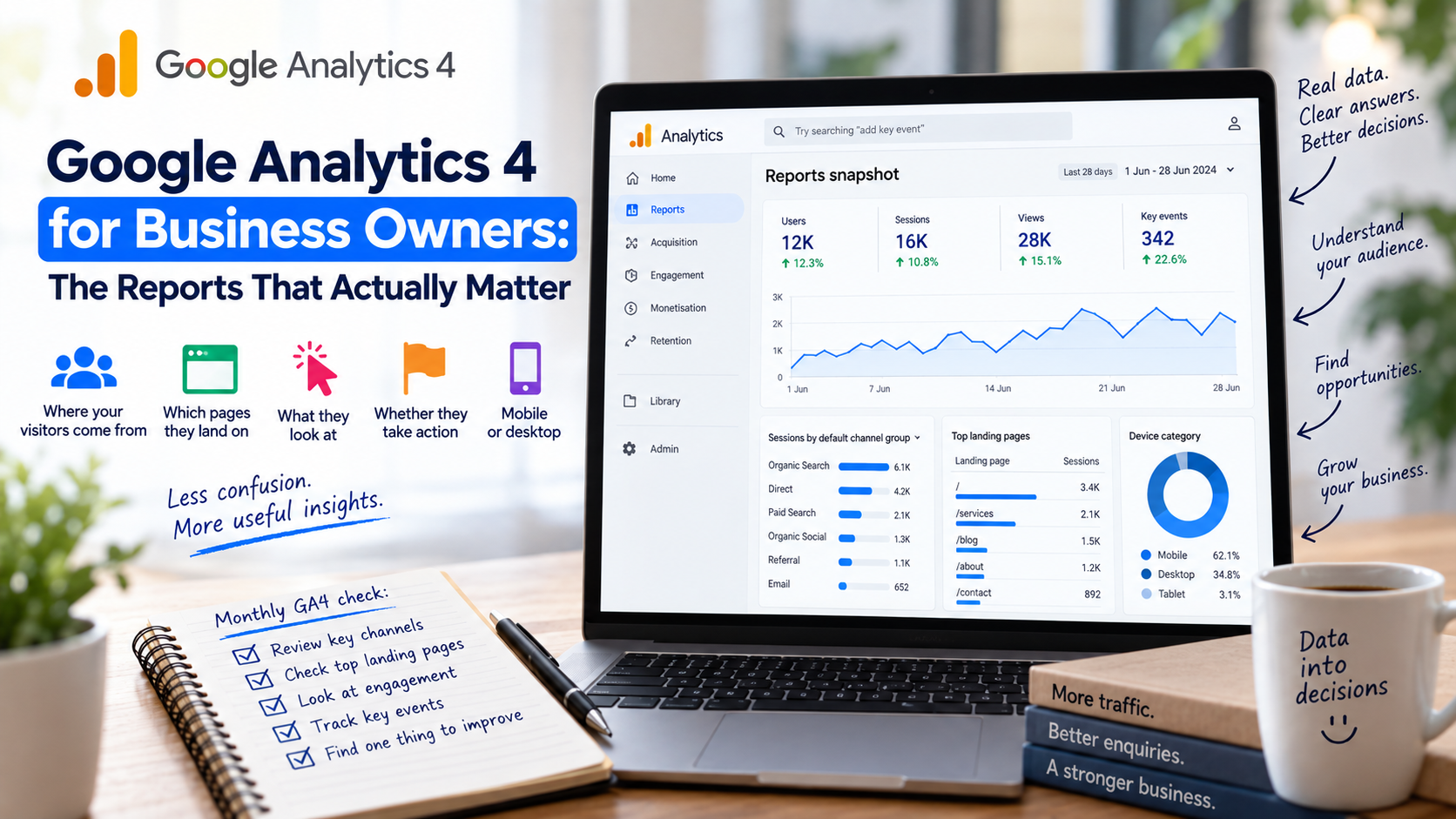
This is important because businesses are moving beyond the question, “Do I rank on Google?”
The next question is becoming, “How often is my business being discovered through AI-powered search?”
That does not mean traditional organic traffic has suddenly become irrelevant.
It means visibility is becoming more complicated.
A business can have strong rankings and weak AI visibility.
Another business can have modest rankings but appear frequently in recommendation-style searches.
Understanding that difference will become increasingly important for marketing teams.
What Should You Do If Your Business Is Invisible in AI Search?
Start with the simplest question: can a stranger understand exactly what your business does within a few seconds of visiting your website?
Then ask whether your website clearly explains who you serve, what problems you solve, what makes you different, and what evidence supports your claims.
Next, search for your business from the perspective of a potential customer. Do not only search your company name. Ask the questions your customers would actually ask.
Ask which companies are best for your industry.
Ask which agencies specialize in your problem.
Ask which businesses provide the service in your location.
Ask what alternatives exist.
Ask what customers should look for before choosing a provider.
Then compare the businesses that appear with your own website.
Look for patterns.
Does the recommended competitor have clearer positioning? More useful content? Better reviews? Stronger case studies? More third-party references? More detailed service pages? More evidence? A stronger reputation within a specific niche?
That exercise can reveal gaps that a traditional keyword-ranking report may never show.
Do Not Try to Be Recommended for Everything
There is also a strategic mistake on the other side.
Some businesses try to make themselves relevant to every possible search.
That usually produces vague positioning.
A better approach is to become exceptionally clear about the customers and problems you are best equipped to serve.
If you are a digital marketing company that works particularly well with small businesses, say so.
If you specialize in ecommerce growth, demonstrate it.
If your strength is SEO for SaaS companies, build deep expertise around that subject.
If you help Indian businesses navigate AI search, create the best resource you can on that problem.
Specificity creates meaning.
Meaning creates relevance.
Relevance gives search systems and, more importantly, customers a clearer reason to consider you.
The Future of Search Belongs to Businesses That Are Easy to Understand
The biggest mistake businesses can make right now is treating AI search as a completely separate discipline from SEO.
It is not.
Google's current documentation makes that clear: the foundational practices that help pages succeed in Search remain relevant to AI features. Google also recommends creating unique, valuable content for people rather than trying to exploit supposed AI-search hacks.
What is changing is the nature of the customer's question.
People are asking longer questions.
They are asking for comparisons.
They are asking for recommendations.
They are asking follow-up questions.
They want explanations rather than lists of links.
And they increasingly expect search systems to help them make decisions.
That means your website needs to do more than rank.
It needs to explain.
It needs to demonstrate.
It needs to prove.
It needs to answer.
And it needs to give people a reason to trust the business behind the website.
Your Competitor Is Not Necessarily Winning Because They Have Better SEO
This is the part worth remembering.
If your competitor keeps getting recommended while you remain invisible, do not immediately assume that they have discovered some secret AI optimization trick.
They may simply have a clearer brand, stronger topical authority, better evidence, more useful content, better customer experiences, stronger reputation signals, or a more clearly defined niche.
And that is good news.
Because those are things you can improve.
The goal should not be to trick AI into mentioning your company.
The goal should be to build the kind of business that an informed customer would genuinely want recommended.
When your website clearly explains what you do, your content demonstrates what you know, your customers provide real evidence of the value you deliver, and other credible sources recognize your expertise, you are building something much more durable than a temporary search tactic.
You are building digital authority.
And in the age of AI search, that may become one of the most valuable marketing assets your business can own.
The Real Question Is No Longer “Do I Rank?”
For years, businesses asked one question: “Where do we rank on Google?”
That question still matters.
But it is no longer enough.
The better question is: “When my ideal customer asks Google or an AI assistant who they should consider, does my business have a credible reason to be part of that answer?”
If the answer is no, the solution is not another 500-word AI-generated article targeting another keyword.
It is a stronger digital presence.
It is clearer positioning.
It is useful content.
It is original insight.
It is real customer evidence.
It is trustworthy information.
And it is a website that helps both people and search systems understand why your business deserves consideration.
AI search is making discovery more conversational, but the fundamentals of earning visibility remain remarkably human: be useful, be clear, be credible, and give people something worth remembering.
That is how you stop being invisible.
And that is how you give your business a genuine chance to become the company customers find, trust, and recommend.