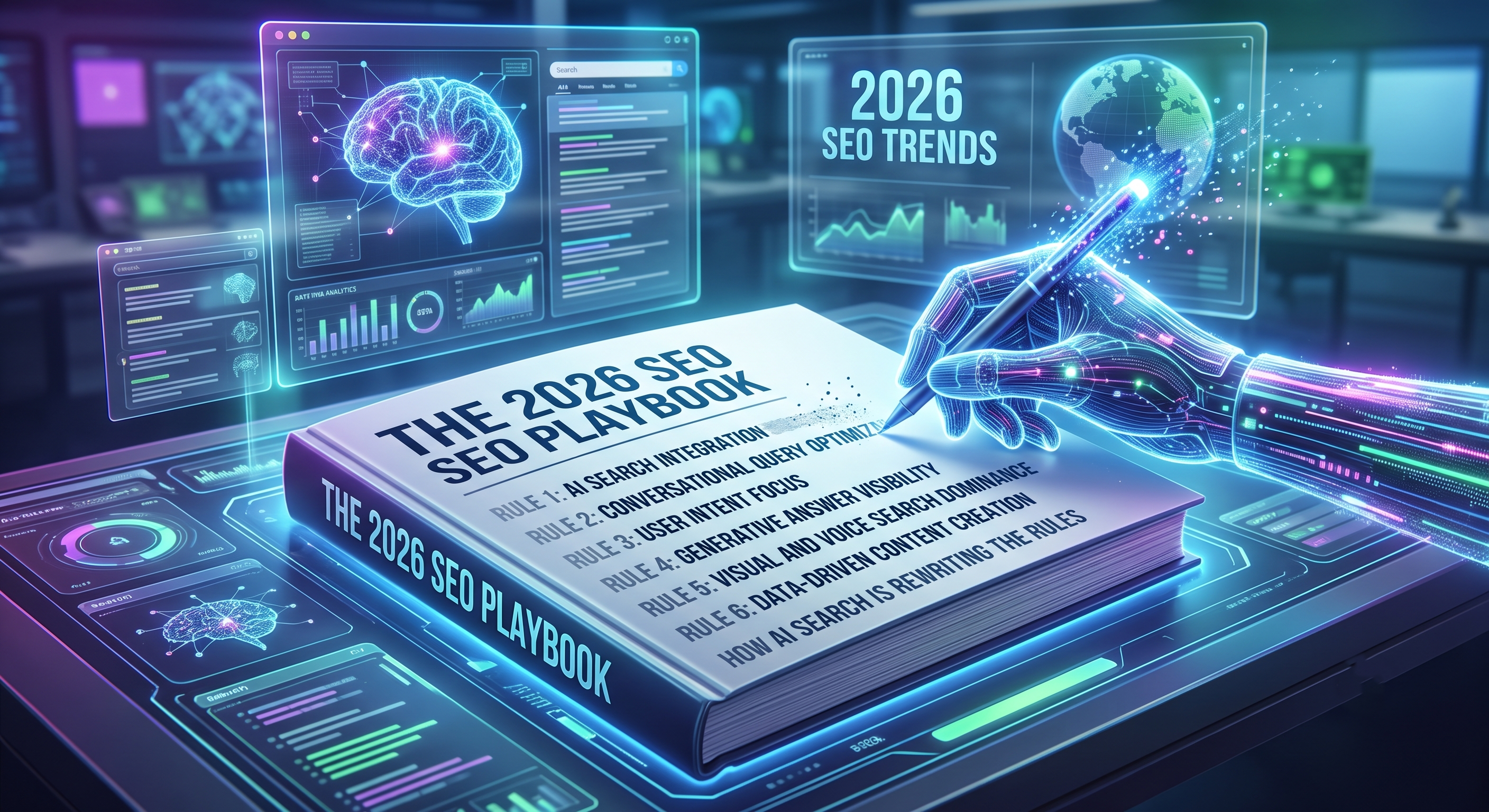
Search engine optimization has changed more in the past three years than in the previous twenty.
Google’s Search Generative Experience (SGE), voice search, and AI assistants like ChatGPT, Gemini, and Siri have fundamentally shifted how people search — and how brands must optimize.
SEO is no longer just about ranking for keywords.
It’s about becoming the best answer wherever users ask questions.
In this guide, we’ll explore how SEO evolved, where it’s heading, and how businesses can adapt to win in the new answer-driven, AI-powered search era.
✅ From Keywords to Intent: The First Evolution of SEO
Traditional SEO focused on:
Exact-match keywords
On-page optimization
Backlinks
Metadata
But search behavior changed — people began searching in natural language:
“best food near me that’s open right now”
“how do I fix slow Wi-Fi on Windows?”
“which running shoes are good for flat feet?”
Google responded by prioritizing search intent, not keywords.
This shift introduced:
Hummingbird (semantic search)
RankBrain (machine learning)
BERT (natural language processing)
Today, SEO success depends on context, meaning, clarity, and usefulness — not stuffing keywords into paragraphs.
✅ The Next Evolution: Answer-Based SEO
Modern searchers want:
faster results
fewer clicks
clearer answers
personalized recommendations
That’s why Google increasingly pushes:
Featured snippets
People Also Ask
Knowledge panels
Zero-click results
AI-generated overviews
Users no longer need to visit 10 websites — they get answers instantly.
Meaning:
Ranking in traditional blue links matters less
— becoming the primary answer matters more.
✅ The Rise of AI Assistants as Search Engines
Millions of users now search using:
ChatGPT
Google Gemini
Perplexity
Meta AI
Voice assistants (Siri, Alexa, Google Assistant)
Instead of typing, users ask:
“What’s the best CRM for startups?”
“How do I start a YouTube channel?”
“Write me a fitness plan.”
AI doesn’t show 10 links — it gives one answer.
To win in this world, brands must optimize not for rankings…
but for retrieval, credibility, and authority.
✅ What Is AEO — Answer Engine Optimization?
AEO is the future of SEO.
It focuses on helping AI systems:
find your content
understand it
trust it
summarize it
cite it
AEO prioritizes:
✅ clear, structured information
✅ expert-backed sources
✅ FAQ-style content
✅ schema markup
✅ authoritative topical depth
✅ strong E-E-A-T signals
If SEO used to ask, “How do we rank?”
AEO asks, “How do we become the answer?”
✅ Why Google & AI Systems Favor Answers Over Keywords
Because users want:
convenience
clarity
confidence
speed
And AI can now:
understand meaning
interpret tone and sentiment
analyze user history
personalize recommendations
So instead of:
“best DSLR cameras 2026”
People ask:
“Which DSLR should I buy for beginner photography under ₹50,000?”
Long-form, conversational, intent-rich queries are now the norm.
✅ The 2026 SEO Reality: Traffic Is Fragmenting
Website traffic now comes from:
Google Search
Google SGE
Social search (TikTok, Instagram, YouTube)
ChatGPT citations
Perplexity answers
Influencer mentions
Podcasts & AI audio search
Voice assistants
If your SEO strategy only targets Google rankings — you're already behind.
✅ How to Optimize for Answers & AI Assistants (Actionable Framework)
✅ 1. Write for Questions, Not Keywords
Use formats like:
How to…
What is…
Pros vs cons
Step-by-step guides
Definitions + examples
Industry stats + timelines
✅ 2. Use Structured Content
bullet lists
tables
numbered steps
comparison charts
takeaways + summaries
AI loves clean structure.
✅ 3. Strengthen E-E-A-T
showcase expertise
include author bios
cite credible sources
add case studies
show real results
Trust = visibility.
✅ 4. Implement Schema Markup
Article
FAQ
How-to
Product
Local business
Schema helps AI understand your content.
✅ 5. Create Topical Authority Clusters
Example:
Pillar: AI in SEO
Clusters:
AI keyword research tools
AI impact on content writing
AI-powered link building
Future of SEO predictions
Authority beats volume.
✅ 6. Optimize for Voice Search
Write conversationally:
“What’s the cheapest way to learn digital marketing?”
✅ 7. Keep Information Updated
AI tools prefer fresh data and recency signals.
✅ Content Quality Is Now More Important Than Rankings
AI assistants pull from:
accurate
well-structured
reader-focused
current
expert-driven
content — not just keyword-optimized articles.
Human value now beats search manipulation.
✅ Will AI Kill SEO?
No — but it’s redefining it.
SEO professionals will focus on:
content strategy
information architecture
user understanding
brand authority
AI-driven insights
answer optimization
SEO isn’t dying — bad SEO is.
✅ What Businesses Should Do in 2026
✅ Stop chasing keywords — build authority
✅ Produce expert-led, research-driven content
✅ Create content AI assistants can cite
✅ Use data storytelling, case studies & unique insights
✅ Make your website the most trustworthy resource
Brands that adapt early will dominate.
✅ Final Thoughts: The Future of SEO Is Human-Centered
Search engines and AI assistants want what users want:
✅ clarity
✅ simplicity
✅ accuracy
✅ trust
✅ relevance
So SEO isn’t moving away from people —
it’s moving closer to them.
The businesses that win won’t be the loudest…
but the most helpful, credible, and answer-focused.